
English| EUR
Suggested for you
More currencies
Choose a language
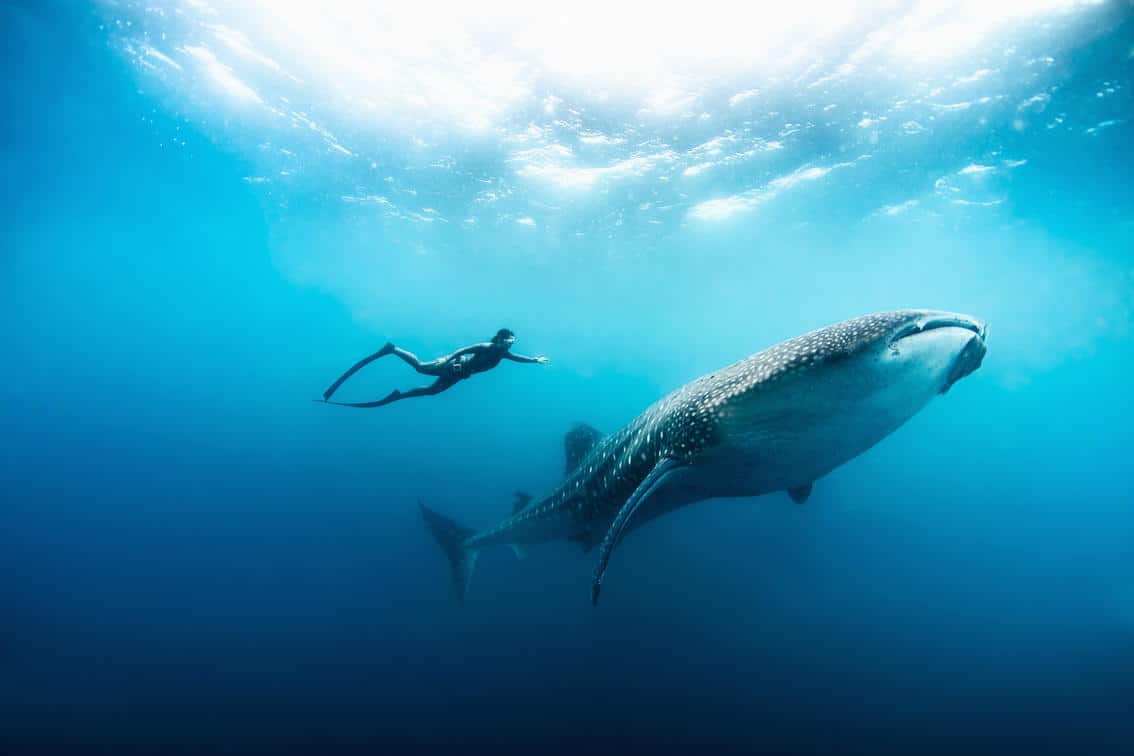
Whale sharks follow plankton blooms through the waters around Zanzibar, creating a narrow window for encounters that depends entirely on ocean currents and nutrient cycles. The season follows a predictable arc, but individual sightings remain a matter of timing and sea state.
Quick answer
Zanzibar diving whale shark season extends from October through March, with peak sightings concentrated between November and February when nutrient-rich currents draw the largest concentrations of plankton. Encounters occur in open water along the Pemba Channel and near Mafia Island, where filter-feeding conditions align. Visibility and plankton density fluctuate week to week, so multiple outings increase the likelihood of a sighting.
Whale sharks migrate through the Zanzibar Archipelago following the northeast monsoon, which stirs nutrient-rich water into the photic zone and triggers phytoplankton blooms. These blooms attract the filter feeders in numbers that vary year to year, depending on current strength and water temperature. The season's timing is consistent, but the density of sightings is not. The Pemba Channel, which separates Pemba Island from the mainland, serves as the primary corridor. Deep water upwells along the channel's western edge, creating plankton clouds visible from the surface. Whale sharks cruise these clouds at depths of five to fifteen meters, mouths agape, filtering thousands of liters per hour. Boat operators monitor sea color and current direction to predict where aggregations will form on any given day. November and December bring the highest encounter rates, with some operators reporting sightings on seventy percent of trips during peak weeks. January and February remain productive but less predictable as the monsoon weakens and plankton disperses. By late March, sightings drop sharply as the whale sharks continue their Indian Ocean migration. Mafia Island, south of Zanzibar, extends the season slightly, with sightings occasionally reported into April. The island's protected marine park offers calmer conditions than the open channel, but fewer whale sharks pass through. Water temperature plays a secondary role—whale sharks prefer 25–28°C, and cooler upwelling can push them into shallower coastal zones where divers and snorkelers have better access. Surface conditions matter more than depth; choppy seas reduce visibility and make it harder to spot dorsal fins from the boat. Operators typically launch between 06:00 and 08:00, when wind is lightest and the low sun angle highlights surface activity. No regulatory framework limits the number of boats or swimmers per whale shark, so crowding occurs during peak season near popular dive sites. Responsible operators enforce a three-meter distance and prohibit touching, but enforcement is inconsistent. Whale sharks tolerate human presence but will dive or accelerate if pursued aggressively. A relaxed approach—drifting parallel rather than chasing—extends encounter duration and reduces stress on the animal. Zanzibar's whale shark season represents one of the most reliable aggregations in the western Indian Ocean, offering predictable access to an otherwise pelagic species within a few hours of shore.
“November and December bring the highest encounter rates, with some operators reporting sightings on seventy percent of trips during peak weeks.”
The prime window for observing whale sharks near Zanzibar occurs from October to December, when these filter feeders migrate through the channel. Aligning your excursions with early morning hours significantly improves sighting reliability.
Warm, 26°C–30°C; calm seas
Whale sharks migrate through these waters following plankton blooms. This period provides the most consistent observation conditions.
Hot, 28°C–32°C; occasional wind
Sightings remain possible as the season winds down. Water visibility is often at its peak.
—
Early boat-based departures are standard. Arriving during the 06:00–14:00 window maximizes the likelihood of locating sharks before midday currents shift.
Verdict: The best opportunity for whale shark encounters is during the months of October to December, specifically by prioritizing boat departures within the 06:00–14:00 arrival window.
Whale shark sightings occur in the open waters surrounding the Zanzibar Archipelago, Tanzania. Reaching these marine zones requires organized boat transport departing from coastal access points near Zanzibar City.
Charter vessel from Zanzibar City harbor
Direct transfer to coastal launch sites
Private hire to departure points
Plan to arrive at your designated departure point within the best arrival window of 06:00–14:00. Early morning departures are standard for boat-based marine wildlife excursions.
Excursions to observe whale sharks in the open waters around the Zanzibar Archipelago operate daily. Boat departures are available throughout the week to accommodate marine wildlife spotting.
Essential gear and documentation for a safe whale shark diving excursion in Zanzibar's open waters.
Everything you need to know about zanzibar diving whale shark season
While sightings can be unpredictable, the primary window for viewing these marine giants typically aligns with nutrient-rich water conditions. Operators usually organize trips during the calmest months when visibility is at its peak.
There is no entrance fee for this activity as whale sharks occur in open waters, not at a gated site. You will only need to account for the costs associated with your chosen boat charter or marine tour provider.
Early morning departures are standard for boat-based marine wildlife excursions, with the best arrival window between 06:00 and 14:00. Planning your arrival for these early hours ensures you maximize your time on the water while conditions remain favorable.
Family participation depends on the specific policy of your chosen tour operator and the child's swimming proficiency. Since this activity takes place in open ocean environments, safety equipment like life jackets is mandatory for all guests.
The whale shark activity is not held at a single venue or facility with set opening hours. These majestic creatures are found throughout the Zanzibar Archipelago, requiring travel by boat to reach their natural habitats.
We recommend bringing sun protection, reliable snorkeling gear, and a waterproof camera to capture the experience. Since you will be spending significant time on the water, ensure you have sufficient hydration and follow the guidance provided by your boat captain regarding marine life interactions.